
At Railsware, T-shaped stories have a way of surprising us, and they never stop. Last time at our #CoffeeWithRW session, our Legal Counsel Nadiia told us how she became a part of a legal team in a tech company, all the way from legal studies to a master’s degree in the US.
This time, you may want to hold on to your hat. Marcos Bravo, Video Content Creator at Mailtrap, shares his career path: a Disney internship, a brewery, handcrafted ice pops, a book, a classroom of teenagers, and a cooking TV show. Today, he deals with video content and a podcast about the very serious problems of email marketing.
We’ll stop here, because some stories are best told by the person who lived them. Marcos, the magic wand is yours.
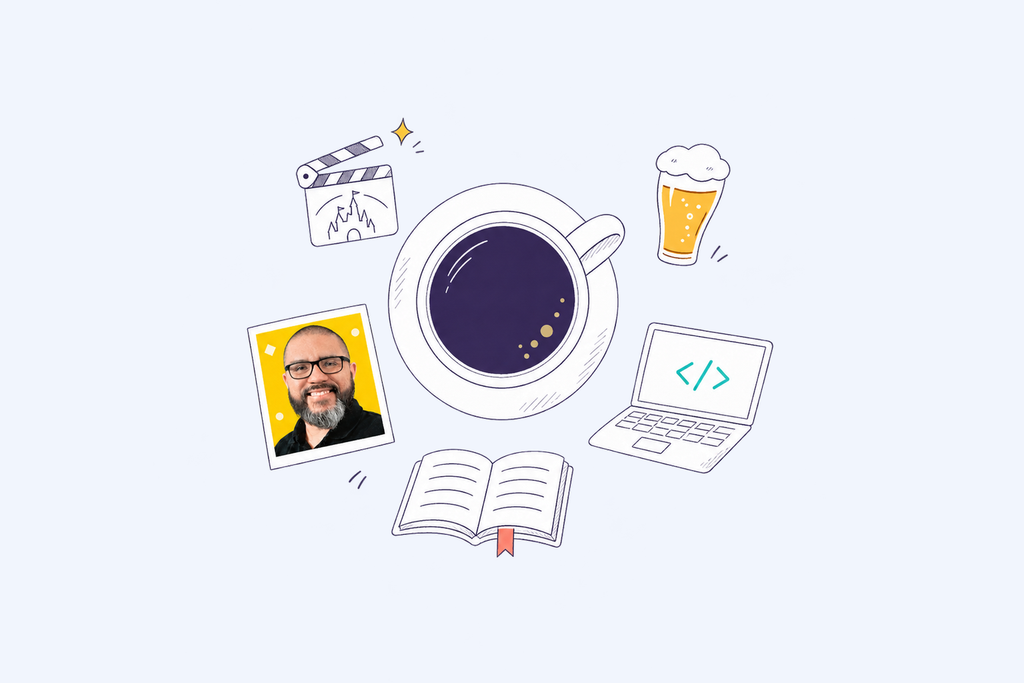
Comedian, Disney, and brand management
I was a kid of the ’80s, and television was my main parent. So, no, I wasn’t dreaming of becoming a world-class athlete or getting a blue-collar job. I wanted to be a comedian.
Somewhere along the way, I discovered that I had a knack for communicating, for finding the right words to make people feel something. That became my calling. It was where I felt I belonged.
So I went to university to study film and television. The curriculum covered all sorts of creative disciplines, but I was especially drawn to screenwriting and the art of storytelling. Then, when I was 20, an opportunity came along to intern at Walt Disney World.
Disney, home to the warmest tales my grandmother once shared with me. I applied fast, passed the interview, and promised myself I wouldn’t waste the chance. At that age, I was ready to do anything just to try (and you’ll see that this became a pattern).
There I met remarkable people and learned how to tell stories. When the internship ended, I went looking for what came next. And as a young person, I jumped into what felt like a dream: traveling the world and taking pictures on cruise ships.
But the dream turned out to be bigger than the camera. First came the photos, then a whole sales team built to sell them, and suddenly I was in sales and marketing, managing people and building a career as a manager faster than I’d ever imagined. Step by step, I learned the basics of sales: how people decide, how to talk to them, and how to lead a team that does it every day.
It was probably there that I first began turning creativity into a system. That lesson will stay with me for a very long time.
With time, sales, storytelling, and marketing drew me into the long game of brand management. I represented major international luxury brands across the Caribbean and the Mexican Riviera. Then the stage grew larger. I led the relationship with Warner Brothers during the publishing of their games in a Polish team.
Working across countries like the US, Poland, and Portugal taught me how differently people approach business. Every market has its own habits, expectations, and unwritten rules. But beneath all those differences, we’re still human.
That’s something I’ve carried throughout my career: understanding people, reading a room, and recognizing what makes someone tick. You might not immediately associate that with marketing, but I believe it’s a skill that helps you build better strategies and make better decisions in almost any field.
For me, business has always been human to human. Even as we move towards a world where AI agents talk to other agents, understanding people (what they need and what drives them) remains essential. Technology can help us do more, but understanding people helps us figure out what is worth doing in the first place.
Not choosing, but trying: MasterChef, writing, officiating weddings
I’m not sure if it’s a generational thing, but I once came across an idea that stuck with me: you should commit to a corporate career for as long as you can still see how far it might take you. At Railsware, we have a value called “Do What Makes Sense”, and I’ve tried to apply that principle beyond work, too.
For me, that means not letting ideas sit in my head forever. If I see potential in something, I’d rather find a way to try it than spend months wondering what might happen.
That’s how I ended up launching a boutique beer business, experimenting with distinctive flavors and styles. I went on to work as a freelance marketing/communications consultant and also write books. Eventually, that curiosity led me to another venture: a handcrafted ice-pop business. Today my wife runs the business, and I cook.
I don’t really want to put myself in a box and decide that I’m only a marketer, only a writer, or only an entrepreneur. I do believe in T-shaped roles.
That same instinct has shaped my career in video, too. Whenever I created content for someone else, I found myself wanting to step in front of the camera. I wanted to tell the story myself, to be a kind of serious comedian, someone whose job is still to make people feel something.
Today, I help implement the video content strategy for Mailtrap, one of Railsware’s complex SaaS products. Email infrastructure might not sound like the most entertaining subject, but I enjoy finding the stories within it, exploring email marketing, and making something technical interesting.
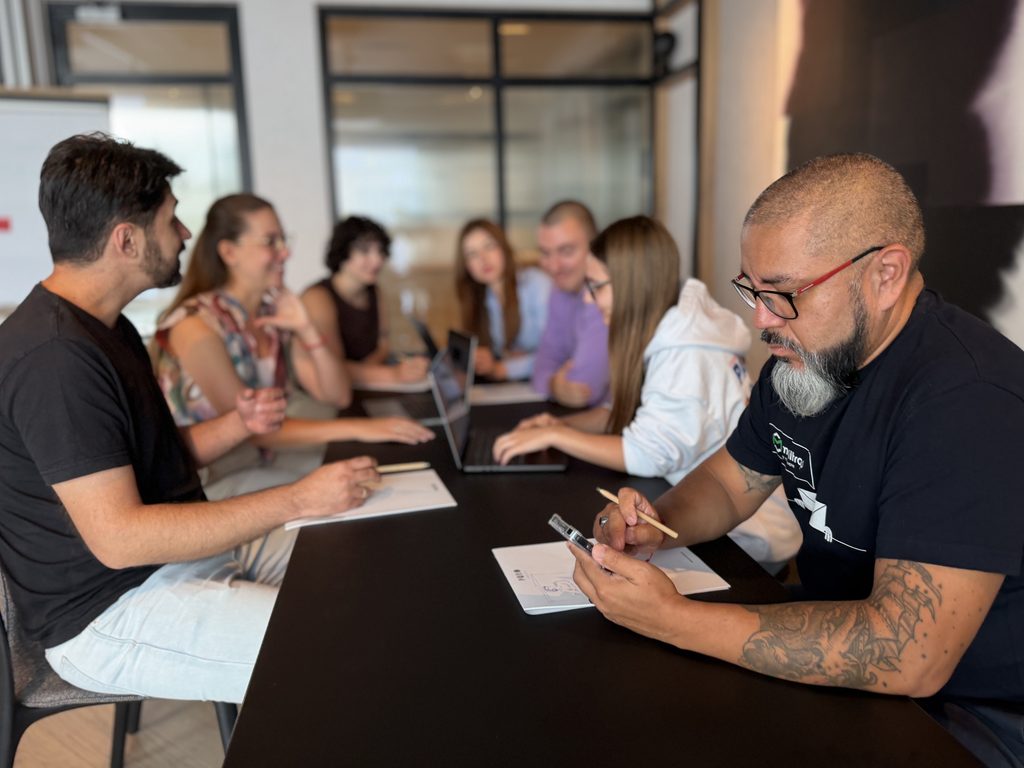
In a way, it brings me back to where I started. I wanted to be a comedian because I loved making people feel something. The subjects have changed, and I’ve picked up a few new skills along the way, but the impulse to tell stories has never really gone away.
AI: Make life easier, not more complicated
I’ll be honest: I wasn’t always a fan of AI. I’ve had to learn to like it.
My philosophy is simple: garbage in, garbage out. But if you know what you’re doing, AI can help you do things you might never have attempted otherwise. It can make life a lot easier, provided you know what you want to achieve.
I use it to plan, structure ideas, and think through strategies. I don’t want it to do the creative thinking for me. I want it to help me turn that thinking into something real.
Take writing a book. I wanted to do it, but I had no idea where to start. I fed AI my structure and worked through the process step by step.
But its help didn’t stop with the writing. I had no experience publishing or selling a book, so it also helped me navigate the practical side of things, including how to get it listed for sale on Amazon. Something that once felt completely out of my league suddenly became achievable.
I’ve used the same approach to build my own app. I can work out the concept, define the structure, and figure out what the minimum viable product should look like. AI helps me turn that thinking into something real.
That’s what I like about it: not having AI do the thinking for me, but having a tool that helps me move from “I’d love to try this” to “I’ve actually done it.” It makes experimenting with new ideas much easier and opens up possibilities I might never have explored otherwise.
Helping others build their own Disney Worlds
Today I’m lucky to pass some of that magic on. I work with a high school entrepreneurship program in Portugal, where I spend an hour every Wednesday with students aged 14 to 17. We talk about the things no one explained to me at their age: what revenue really is, who you are marketing to and why, and what people truly need.
Together we’re building a group idea. The students have everything it takes to create. They can’t code, so we vibecode an app, and what matters is that they understand what it’s for. When they ask me about AI, my answer is always the same: it’s a tool for turning a vision into reality, not a substitute for having one. It should never stop you from creating. It should help you bring the idea to life.
It has only been two months and five or six classes, and the students have already stood up and delivered Shark Tank-style presentations.
Watching a 15-year-old pitch their own idea is the closest I’ve come to the feeling of that first day at Disney.
How to manage to be everything
People often ask how I manage to be a marketer, a co-founder, a cook, a mentor, and an author all at once. My answer is a simple rule I call three by three: every day, I choose the three things that must happen, and I commit to those. Not a long list of hopes, just three real priorities. It keeps me in control, and it means that no matter how chaotic the day gets, the important things move forward.
The second rule is softer: rest. On weekends, I close the laptop, cook something just for the joy of it, and let the week go. That’s when the good ideas find me.
So choose your three, protect your quiet, and keep walking toward the things you love.